Multi-National Event Coordination

Project Delivery
时间
2022-2023
标签
# Coordination
# Operations
# Process Design
我的角色
Central Asia NOC Relations Manager
团队
The National Olympic and Paralympic Committee Service (NCS) team
工具
Email, Excel, shared planning doc, meeting templates, task logs
受众
Chefs de mission, NOC coordinators, internal operations teams
时间
2022-2023
标签
# Coordination
# Operations
# Process Design
我的角色
Central Asia NOC Relations Manager
团队
The National Olympic and Paralympic Committee Service (NCS) team
工具
Email, Excel, shared planning doc, meeting templates, task logs
受众
Chefs de mission, NOC coordinators, internal operations teams
Coordinating Seven Central Asian NOCs for the 19th Asian Games
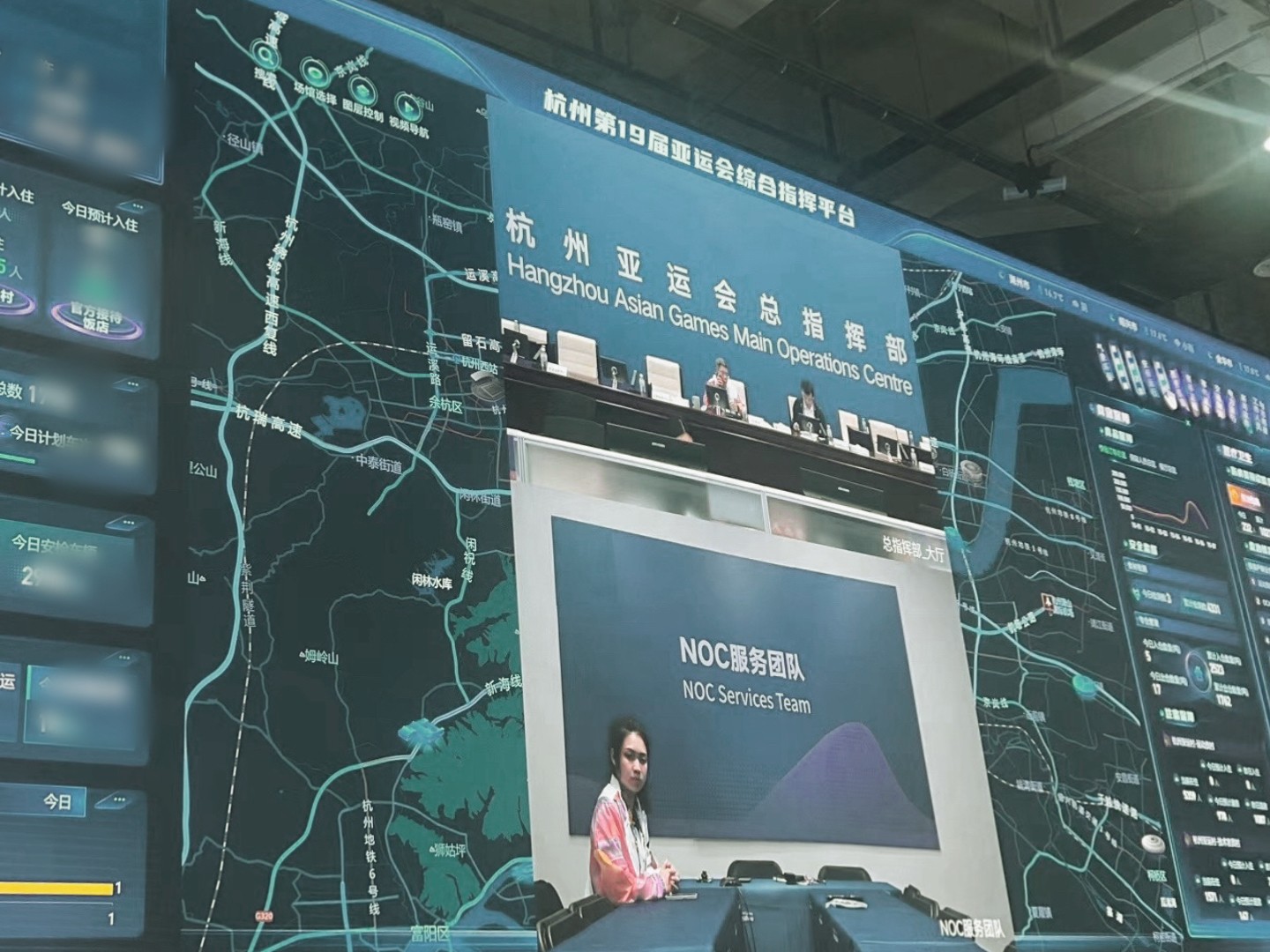
As Central Asia NOC Relations Manager within the National Olympic and Paralympic Committee Service team, I supported seven National Olympic Committees across both pre-Games coordination and Games-time problem solving. My work focused on helping delegations navigate complex policies, evolving requests, and cross-department processes so they could participate more smoothly in one of the largest multi-sport events to date.
项目背景
The 19th Asian Games was a continental multi-sport event that, after a one-year delay, brought together more than 12,000 athletes from 45 National Olympic Committees across 40 sports. As the largest Asian Games to date, it required coordination at exceptional scale. Within this environment, I worked with seven Central Asian NOCs: I.R. Iran, Afghanistan, Kazakhstan, Kyrgyzstan, Tajikistan, Turkmenistan, and Uzbekistan.
核心问题
The challenge was not just scale, but ambiguity. Detailed policies existed, yet the guidebook could not fully cover real-world cases, especially when delegations raised special requests, timelines tightened, and responsibility boundaries across departments were unclear.
设计过程
Tracked requests and follow-ups across seven NOCs throughout both preparation and event operations
Coordinated directly with chefs de mission, NOC coordinators, and internal teams to move issues across departments
Prioritized issues based on event timelines, especially for accreditation and last-minute delegation changes
Clarified next steps through email coordination and checklists so requests would not stall between teams
Ran meetings and maintained communication rhythms, including weekly NCS check-ins and daily Central Asia team coordination
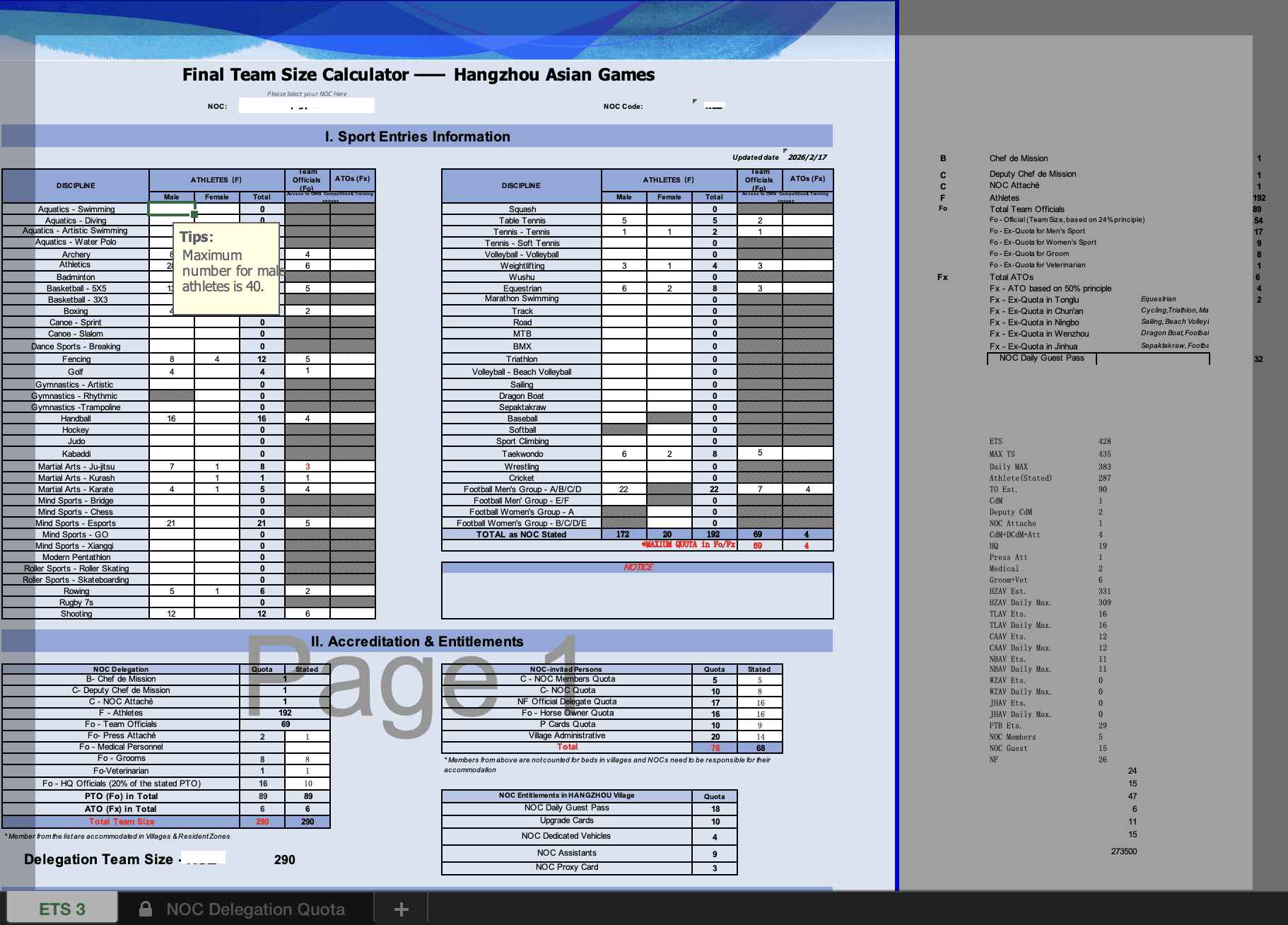
Contributed to shared working structures, including a shared operating plan, meeting templates, task logs, and a team size calculator supporting quota logic

交付内容
Shared operating plan for delegation coordination
Meeting templates and follow-up structure
Task log for issue tracking and next steps
Team size report template
Team size calculator supporting quota logic

项目成果
Supported smoother participation for more than 2,400 athletes and team officials across seven Central Asian delegations.
One particularly complex case involved a delegation making large-scale registration changes before the Games without a single final confirmed list. I worked through three consecutive days of in-person meetings to verify participant details line by line and move the process toward a usable final version.
项目反思
This experience shaped how I approach design today. In both event coordination and learning design, I often begin by identifying what needs to be clarified, translating complex requirements into workable structures, and helping different stakeholders move toward a shared goal.
What I learned here carries directly into my current work: whether I am supporting delegations or course teams, I am often doing the same thing, clarifying requirements, building structure, and reducing friction so people can move forward with confidence.
项目背景
The 19th Asian Games was a continental multi-sport event that, after a one-year delay, brought together more than 12,000 athletes from 45 National Olympic Committees across 40 sports. As the largest Asian Games to date, it required coordination at exceptional scale. Within this environment, I worked with seven Central Asian NOCs: I.R. Iran, Afghanistan, Kazakhstan, Kyrgyzstan, Tajikistan, Turkmenistan, and Uzbekistan.
核心问题
The challenge was not just scale, but ambiguity. Detailed policies existed, yet the guidebook could not fully cover real-world cases, especially when delegations raised special requests, timelines tightened, and responsibility boundaries across departments were unclear.
设计过程
Tracked requests and follow-ups across seven NOCs throughout both preparation and event operations
Coordinated directly with chefs de mission, NOC coordinators, and internal teams to move issues across departments
Prioritized issues based on event timelines, especially for accreditation and last-minute delegation changes
Clarified next steps through email coordination and checklists so requests would not stall between teams
Ran meetings and maintained communication rhythms, including weekly NCS check-ins and daily Central Asia team coordination
Contributed to shared working structures, including a shared operating plan, meeting templates, task logs, and a team size calculator supporting quota logic

交付内容
Shared operating plan for delegation coordination
Meeting templates and follow-up structure
Task log for issue tracking and next steps
Team size report template
Team size calculator supporting quota logic

项目成果
Supported smoother participation for more than 2,400 athletes and team officials across seven Central Asian delegations.
One particularly complex case involved a delegation making large-scale registration changes before the Games without a single final confirmed list. I worked through three consecutive days of in-person meetings to verify participant details line by line and move the process toward a usable final version.
项目反思
This experience shaped how I approach design today. In both event coordination and learning design, I often begin by identifying what needs to be clarified, translating complex requirements into workable structures, and helping different stakeholders move toward a shared goal.
What I learned here carries directly into my current work: whether I am supporting delegations or course teams, I am often doing the same thing, clarifying requirements, building structure, and reducing friction so people can move forward with confidence.
Multi-National Event Coordination