
GA Onboarding Course
GA Onboarding Course
Learning Design
时间
Fall 2024
标签
# Onboarding
# Course Design
# Workplace Learning
我的角色
Learning designer
团队
Individual project with client collaboration
工具
Canvas, Qualtrics
受众
New CNDLS Graduate Associates
时间
Fall 2024
标签
# Onboarding
# Course Design
# Workplace Learning
我的角色
Learning designer
团队
Individual project with client collaboration
工具
Canvas, Qualtrics
受众
New CNDLS Graduate Associates
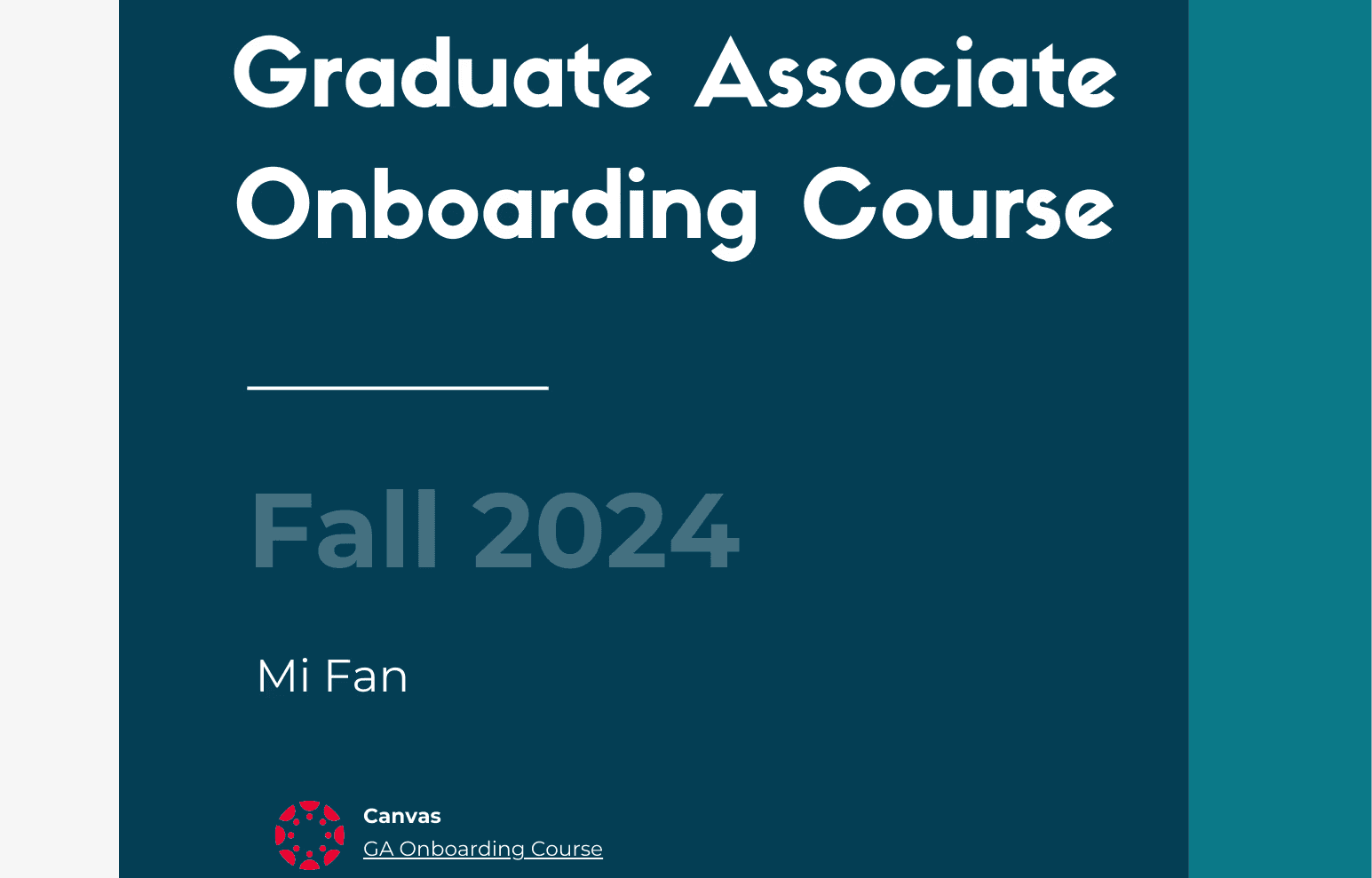
Designing a structured onboarding course for new CNDLS Graduate Assistants
Designing a structured onboarding course for new CNDLS Graduate Assistants
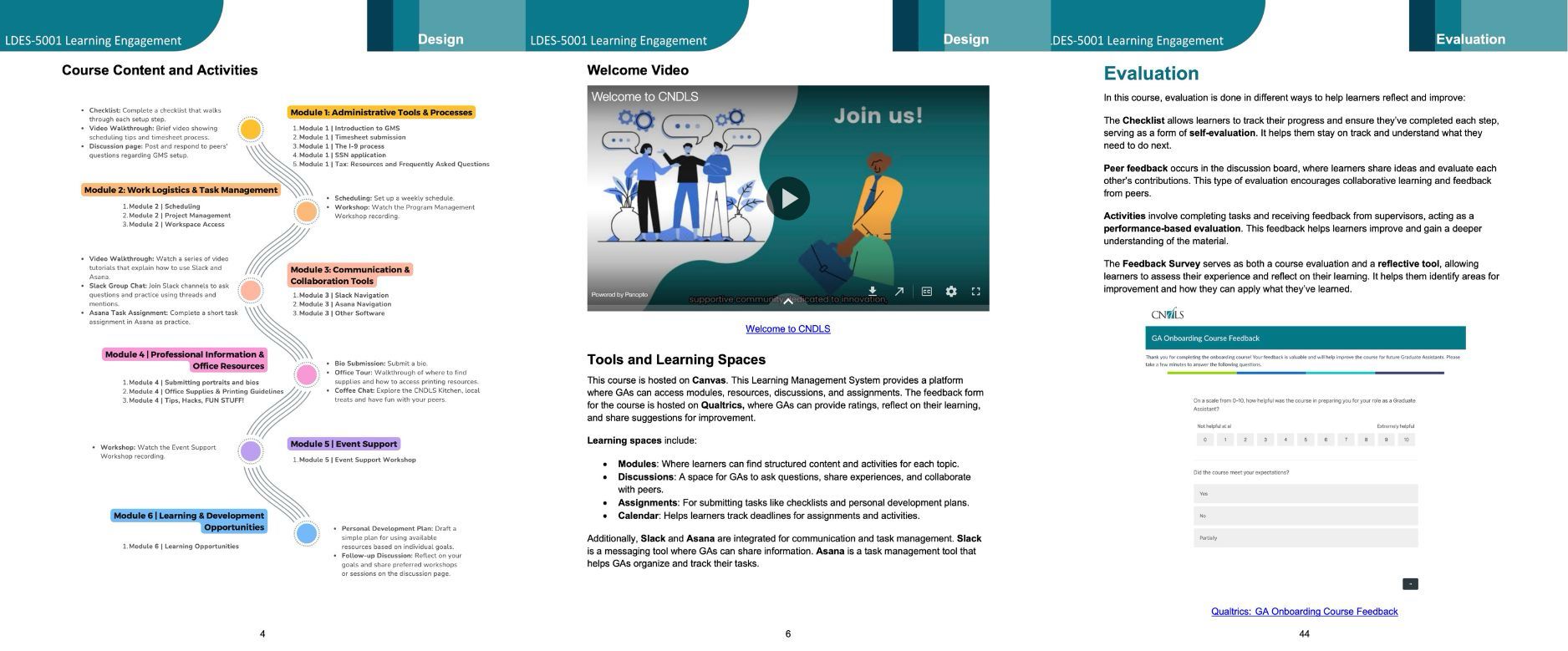
Designed a Canvas-based onboarding experience for new CNDLS Graduate Assistants to make administrative processes easier to understand, reduce repeated questions to supervisors, and provide a clearer path through the first weeks of work. The project was later shared by the client. The course was built around six modules and combined time-sensitive onboarding steps with revisitable resources, practical tasks, and peer interaction.
项目背景
New CNDLS GAs often enter with very different levels of familiarity with Georgetown systems and workplace procedures. Many are first-year students, and a large percentage are international students who may be new to processes such as I-9, Social Security, and U.S. tax requirements. Existing university training materials were available, but they did not always answer the practical questions learners had in the moment.
核心问题
The challenge was a lack of structure. New GAs needed clearer guidance on what to do, when to do it, and where to go for help, without turning the experience into a dense informational handbook.
设计过程
Defined the problem with the client and identified recurring pain points around GMS, I-9, SSN, tax, and repeated supervisor questions.
Used backward design to start from learning goals and build module-level objectives, activities, and resources.
Organized the onboarding into six modules, with Module 1 focused on first-week, time-sensitive tasks and later modules designed for flexible use throughout the semester.
Applied cognitive load principles to break dense procedural content into smaller, step-by-step learning units.
Added discussions and hands-on activities so the course would function as a learner-centered experience rather than a static handbook.
Used a task-tracking table and meeting notes to stay aligned with the client and iterate efficiently during development.
交付内容
Canvas onboarding course, including:
Six course modules
Checklist-based onboarding structure
Discussion and activity design for peer support
Feedback and evaluation plan using survey, discussion, and supervisor feedback
项目成果
Created a clearer onboarding pathway that turned scattered administrative guidance into a structured, self-paced learning experience. The client later shared the project, and the design brought together practical tasks, revisitable resources, and peer discussion in a format that better supported new GAs through their first weeks and beyond.
项目反思
This project taught me how to design for clarity when the content itself is highly procedural. Instead of treating onboarding as information delivery, I learned to structure it as a learner-centered experience through pacing, modular organization, and practical activity design. Because I was also close to the learner group, the project strengthened my ability to design from lived user insight while still grounding the work in learning theory and clear course structure.
项目背景
New CNDLS GAs often enter with very different levels of familiarity with Georgetown systems and workplace procedures. Many are first-year students, and a large percentage are international students who may be new to processes such as I-9, Social Security, and U.S. tax requirements. Existing university training materials were available, but they did not always answer the practical questions learners had in the moment.
核心问题
The challenge was a lack of structure. New GAs needed clearer guidance on what to do, when to do it, and where to go for help, without turning the experience into a dense informational handbook.
设计过程
Defined the problem with the client and identified recurring pain points around GMS, I-9, SSN, tax, and repeated supervisor questions.
Used backward design to start from learning goals and build module-level objectives, activities, and resources.
Organized the onboarding into six modules, with Module 1 focused on first-week, time-sensitive tasks and later modules designed for flexible use throughout the semester.
Applied cognitive load principles to break dense procedural content into smaller, step-by-step learning units.
Added discussions and hands-on activities so the course would function as a learner-centered experience rather than a static handbook.
Used a task-tracking table and meeting notes to stay aligned with the client and iterate efficiently during development.
交付内容
Canvas onboarding course, including:
Six course modules
Checklist-based onboarding structure
Discussion and activity design for peer support
Feedback and evaluation plan using survey, discussion, and supervisor feedback
项目成果
Created a clearer onboarding pathway that turned scattered administrative guidance into a structured, self-paced learning experience. The client later shared the project, and the design brought together practical tasks, revisitable resources, and peer discussion in a format that better supported new GAs through their first weeks and beyond.
项目反思
This project taught me how to design for clarity when the content itself is highly procedural. Instead of treating onboarding as information delivery, I learned to structure it as a learner-centered experience through pacing, modular organization, and practical activity design. Because I was also close to the learner group, the project strengthened my ability to design from lived user insight while still grounding the work in learning theory and clear course structure.
GA Onboarding Course
项目亮点
Designing learner-centered onboarding
Structuring dense information into usable learning
Translating procedures into practical course experiences