天织织机:关于AI 素养学习的桌游设计
天织织机:关于AI 素养学习的桌游设计
教学设计
时间
2026 Spring
标签
# AI Literacy
# Game-Based Learning
# Systems Design
我的角色
Game Designer - Individual Project
工具
Canva
时间
2026 Spring
标签
# AI Literacy
# Game-Based Learning
# Systems Design
我的角色
Game Designer - Individual Project
工具
Canva
一款将 AI 素养与风险转化为互动式学习体验的桌游设计。
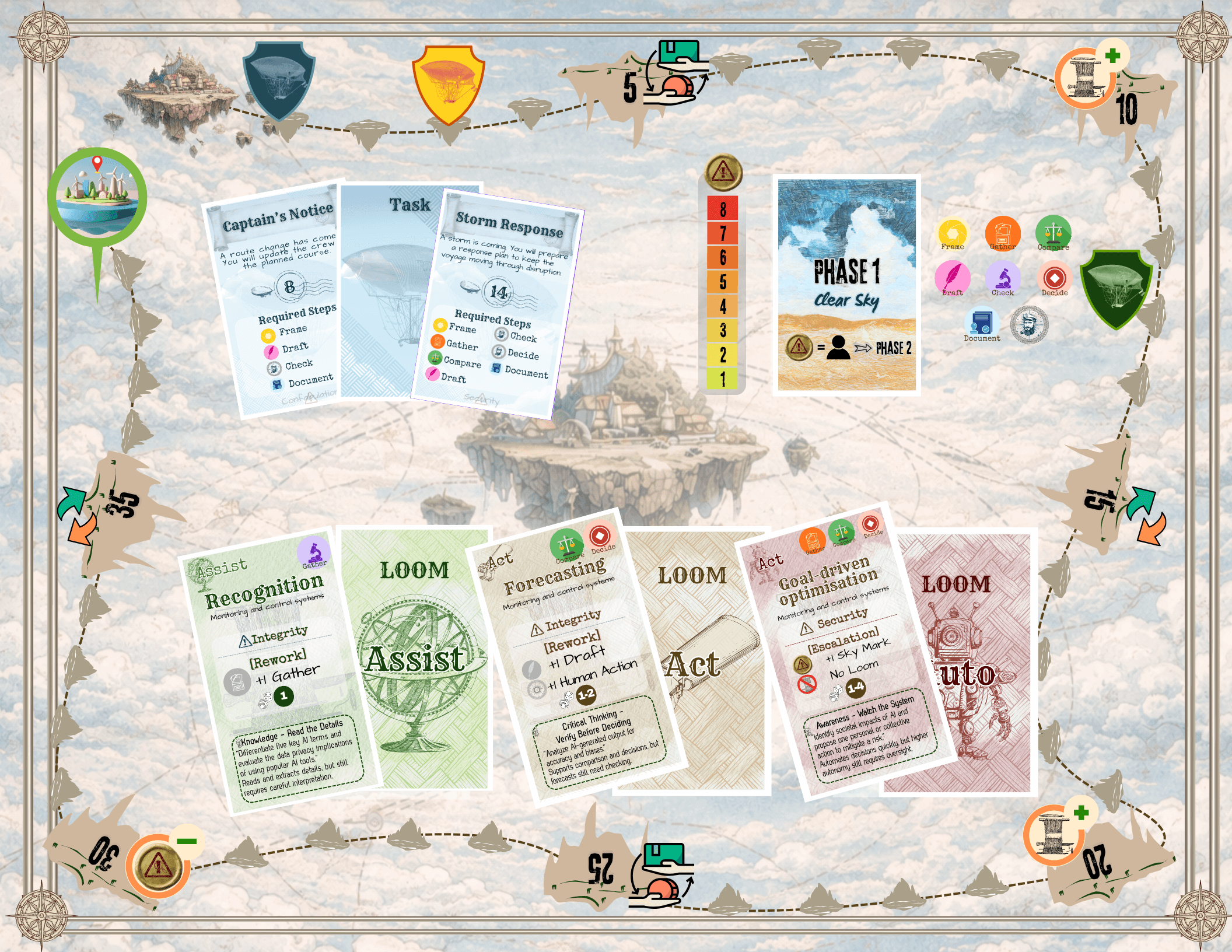
《天织织机》是一款桌游原型,旨在将 AI 素养与风险转化为一种互动式学习体验。玩家在游戏中通过完成任务、使用 AI(Loom) 卡牌、承担风险与做出判断,体验 AI 如何支持工作、风险如何出现,以及哪些责任应当始终由人来承担。尝试将相关框架转化为任务、规则、约束与后果组成的可玩系统。
项目背景
随着 AI 越来越多地进入学术与专业工作,许多关于 AI 素养的讨论仍停留在概念解释或政策层面。我想探索一种更具互动性的形式,让这些想法能够被体验、讨论与质疑。这个项目借助游戏化学习,将人类监督、工作流设计与 AI 风险等概念转化为玩家可以直接参与的系统。
核心问题
如何把抽象的 AI 素养与风险框架,转化为一种可参与可讨论的游戏体验?
设计过程
Defining the core learning system
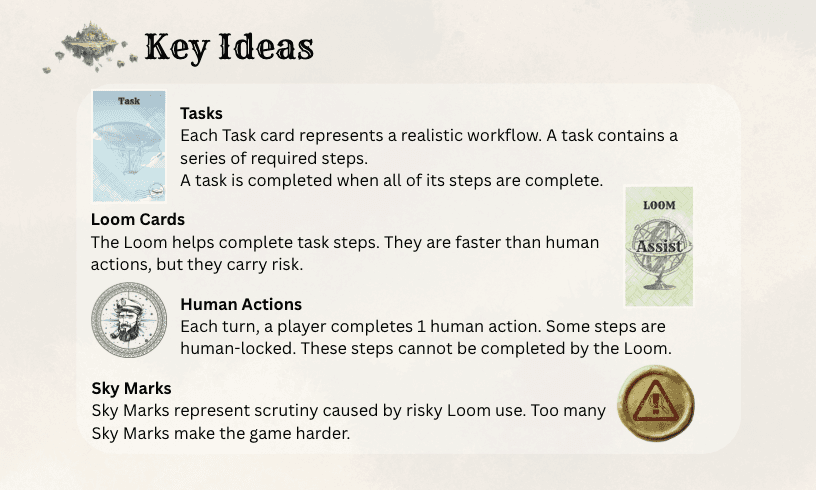
I began by identifying the key ideas the game needed to teach: tasks, Loom cards, human actions, and Sky Marks. Rather than presenting AI literacy as static information, I designed these as interacting elements in the game system. Tasks represent realistic workflows, Loom cards help complete steps faster but introduce risk, human actions preserve judgment, and Sky Marks make scrutiny visible over time.

Translating frameworks into task structure and risk
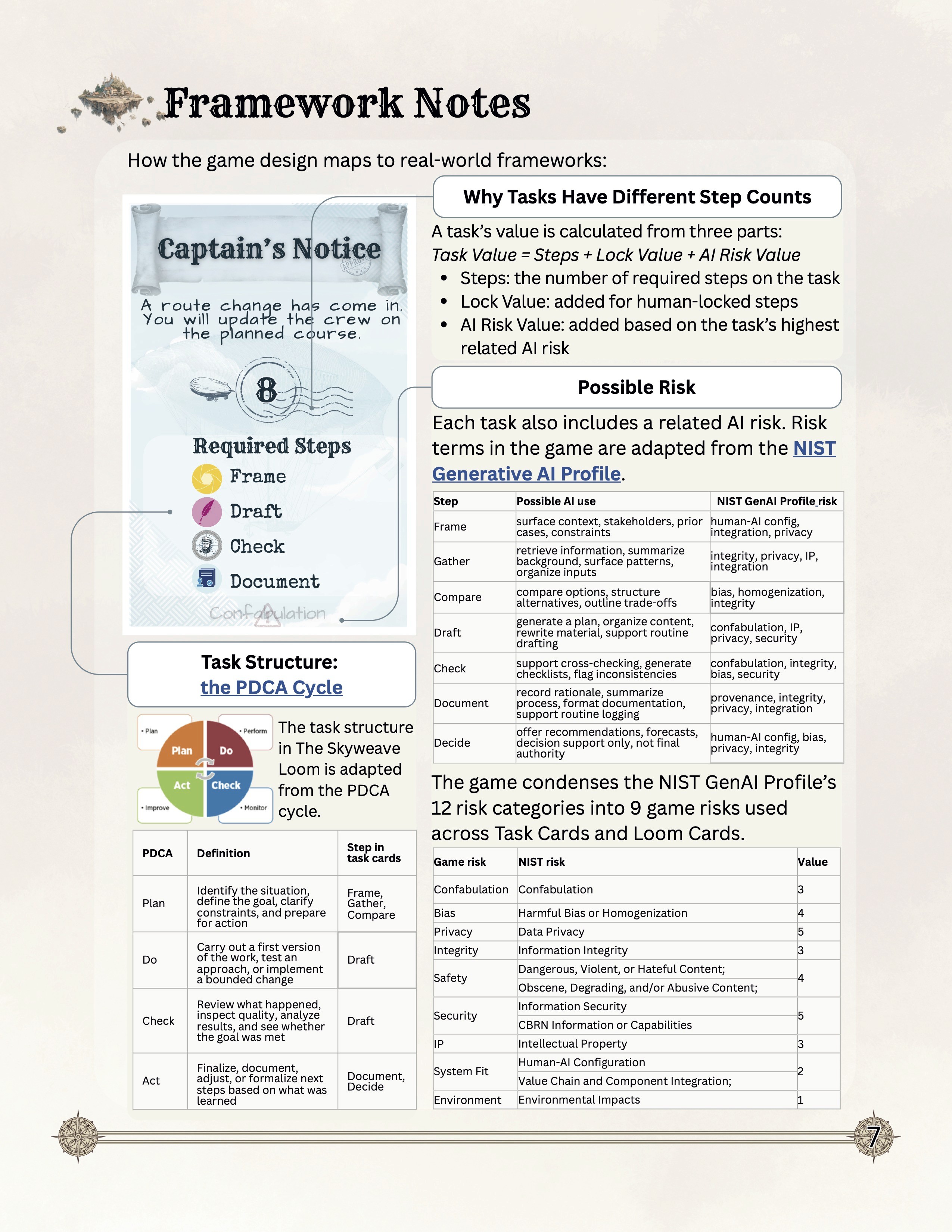
I mapped the game system to real-world frameworks so the mechanics would reflect more than theme alone. The task structure draws on the PDCA cycle, while the game’s risk categories adapt ideas from the NIST Generative AI Profile into a smaller and more playable set of risks. This step helped shape task value, workflow logic, and the relationship between AI use and consequence.

Building the Loom card system
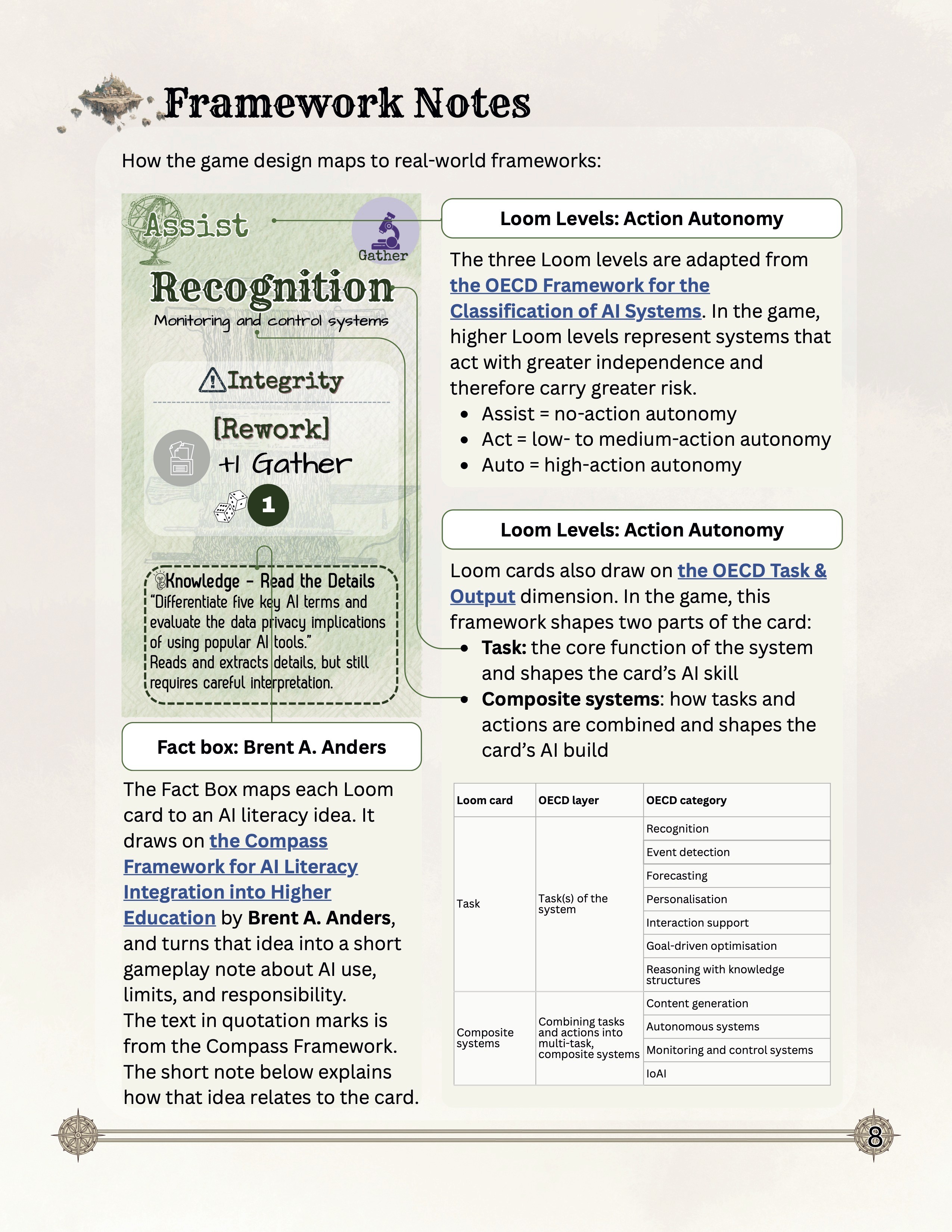
I then developed the Loom cards by connecting them to the OECD framework for AI systems and the Compass Framework for AI literacy. The different Loom levels represent different degrees of action autonomy, and each card includes a short fact box that links gameplay to an AI literacy idea. This helped the cards function as both game mechanics and learning prompts.

Turning ideas into rule logic
Beyond the visual components, I also designed the rule structure to make AI use feel strategic rather than automatic. Players can use Loom cards to complete work more quickly, but each use may trigger risk through dice rolls and effects. Some workflow steps are human-locked, which keeps final judgment and certain responsibilities with the player instead of the system. I also introduced Sky Marks and phase changes so that risky behavior affects not only a single turn but the overall difficulty of the game.
Balancing playability and learning
As the system developed, I adjusted rules to keep the game understandable while still reflecting real tradeoffs. This included thinking through turn order, task completion, AI access, scrutiny thresholds, and win conditions. The goal was to create a game that was simple enough to play, but structured enough to spark discussion about where AI is useful, where it creates risk, and what should remain human responsibility.
交付内容
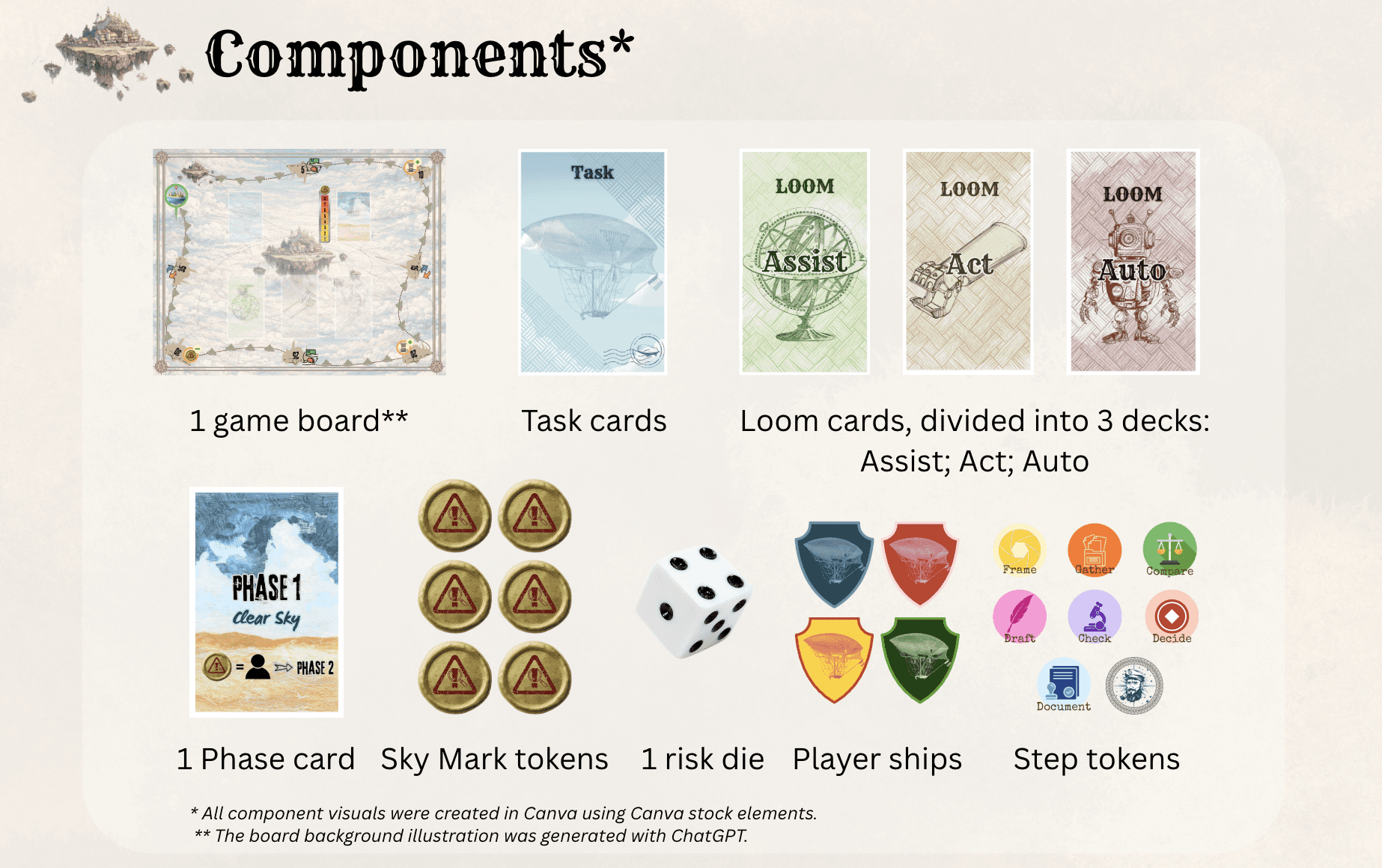
A playable board game prototype including a game board, task cards, AI cards, rule structure, risk system, and supporting visual assets.

项目成果
The project produced a playable board game prototype, complete with a task system, Loom card system, risk mechanics, and supporting visual assets. More importantly, it turned abstract ideas about AI literacy, risk, and human responsibility into a concrete experience that players can interact with, question, and discuss. The project demonstrates my ability to translate complex frameworks into a structured learning system that is both engaging and instructionally meaningful.
项目背景
随着 AI 越来越多地进入学术与专业工作,许多关于 AI 素养的讨论仍停留在概念解释或政策层面。我想探索一种更具互动性的形式,让这些想法能够被体验、讨论与质疑。这个项目借助游戏化学习,将人类监督、工作流设计与 AI 风险等概念转化为玩家可以直接参与的系统。
核心问题
如何把抽象的 AI 素养与风险框架,转化为一种可参与可讨论的游戏体验?
设计过程
Defining the core learning system
I began by identifying the key ideas the game needed to teach: tasks, Loom cards, human actions, and Sky Marks. Rather than presenting AI literacy as static information, I designed these as interacting elements in the game system. Tasks represent realistic workflows, Loom cards help complete steps faster but introduce risk, human actions preserve judgment, and Sky Marks make scrutiny visible over time.

Translating frameworks into task structure and risk
I mapped the game system to real-world frameworks so the mechanics would reflect more than theme alone. The task structure draws on the PDCA cycle, while the game’s risk categories adapt ideas from the NIST Generative AI Profile into a smaller and more playable set of risks. This step helped shape task value, workflow logic, and the relationship between AI use and consequence.

Building the Loom card system
I then developed the Loom cards by connecting them to the OECD framework for AI systems and the Compass Framework for AI literacy. The different Loom levels represent different degrees of action autonomy, and each card includes a short fact box that links gameplay to an AI literacy idea. This helped the cards function as both game mechanics and learning prompts.

Turning ideas into rule logic
Beyond the visual components, I also designed the rule structure to make AI use feel strategic rather than automatic. Players can use Loom cards to complete work more quickly, but each use may trigger risk through dice rolls and effects. Some workflow steps are human-locked, which keeps final judgment and certain responsibilities with the player instead of the system. I also introduced Sky Marks and phase changes so that risky behavior affects not only a single turn but the overall difficulty of the game.
Balancing playability and learning
As the system developed, I adjusted rules to keep the game understandable while still reflecting real tradeoffs. This included thinking through turn order, task completion, AI access, scrutiny thresholds, and win conditions. The goal was to create a game that was simple enough to play, but structured enough to spark discussion about where AI is useful, where it creates risk, and what should remain human responsibility.
交付内容
A playable board game prototype including a game board, task cards, AI cards, rule structure, risk system, and supporting visual assets.

项目成果
The project produced a playable board game prototype, complete with a task system, Loom card system, risk mechanics, and supporting visual assets. More importantly, it turned abstract ideas about AI literacy, risk, and human responsibility into a concrete experience that players can interact with, question, and discuss. The project demonstrates my ability to translate complex frameworks into a structured learning system that is both engaging and instructionally meaningful.
天织织机:关于AI 素养学习的桌游设计