Mind Mapping In Elementary English

Mind Mapping In Elementary English

Learning Design

Time

2022

Tags

# Instructional Design

# Classroom Research

# Visual Learning

My role

Teacher - Individual project

Tools

Lesson design, classroom observation, student work analysis, mind mapping activities

Audience

Elementary English learners

Time

2022

Tags

# Instructional Design

# Classroom Research

# Visual Learning

My role

Teacher - Individual project

Tools

Lesson design, classroom observation, student work analysis, mind mapping activities

Audience

Elementary English learners

Improving how mind maps support language learning in elementary English

Improving how mind maps support language learning in elementary English

Examined how mind mapping was being used in upper-elementary English instruction and redesigned classroom use to better support language learning. The project combined analysis of student work with classroom-based teaching adjustments to improve content organization, logical structure, and language output.

Context

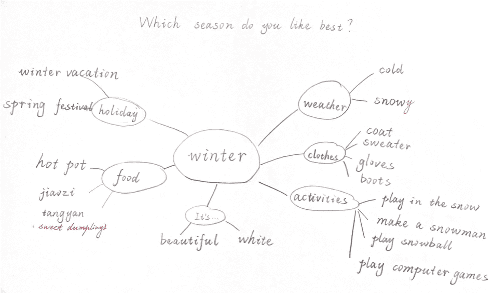
Mind maps can support knowledge organization and fit the cognitive characteristics of upper-elementary learners, but students do not always use them in ways that strengthen learning. In this project, I focused on a Grade 5 English unit, My Favourite Season, as a concrete teaching case.

Problem

Student mind maps often showed three recurring issues: overemphasis on decoration, content stacking without clear relationships, and framework-building without sufficient thinking or logic behind it. These problems limited the value of mind maps as tools for language learning.

Process

  • Analyzed student mind map assignments to identify common patterns of misuse

  • Defined three major problem areas: visual distraction, content piling, and weak logical structure

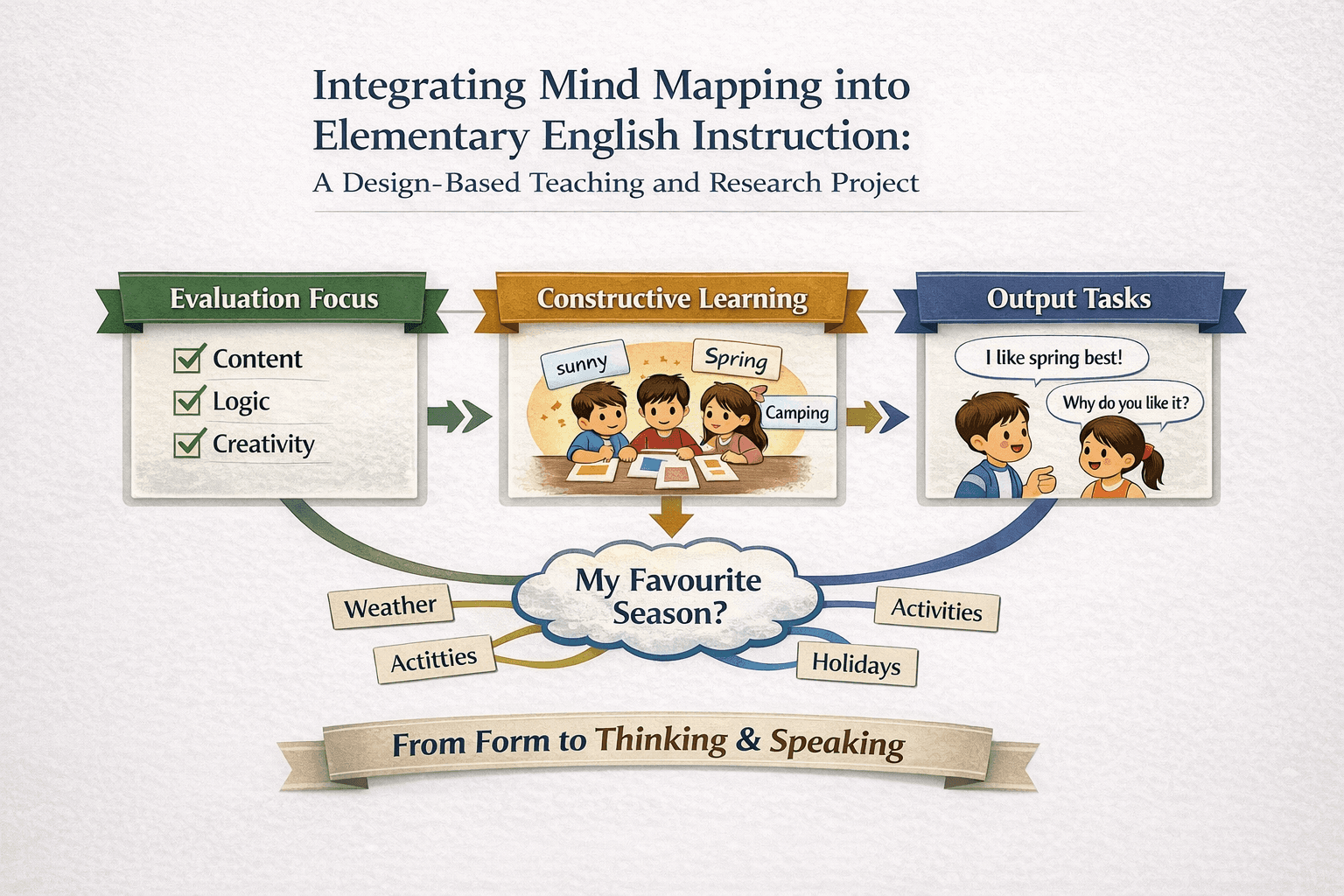
  • Redesigned instruction to emphasize purpose, content relationships, and branching logic rather than appearance

  • Guided students through collaborative keyword extraction and category building before map creation

  • Used the revised maps as scaffolds for pair dialogue and language output around the unit’s core question

Deliverables

  • Classroom-based research paper

  • Revised lesson design using mind mapping

  • Student mind map examples and teaching case analysis

Outcomes

Developed a clearer instructional approach for using mind maps as language-learning tools rather than decorative assignments. After the redesign, student maps showed stronger logic and richer content, and the maps better supported dialogue creation and language output.

Reflection

This project showed me that a learning tool becomes meaningful only when students understand its purpose and structure. It also strengthened my interest in designing activities that move beyond content organization toward actual language use.

Context

Mind maps can support knowledge organization and fit the cognitive characteristics of upper-elementary learners, but students do not always use them in ways that strengthen learning. In this project, I focused on a Grade 5 English unit, My Favourite Season, as a concrete teaching case.

Problem

Student mind maps often showed three recurring issues: overemphasis on decoration, content stacking without clear relationships, and framework-building without sufficient thinking or logic behind it. These problems limited the value of mind maps as tools for language learning.

Process

  • Analyzed student mind map assignments to identify common patterns of misuse

  • Defined three major problem areas: visual distraction, content piling, and weak logical structure

  • Redesigned instruction to emphasize purpose, content relationships, and branching logic rather than appearance

  • Guided students through collaborative keyword extraction and category building before map creation

  • Used the revised maps as scaffolds for pair dialogue and language output around the unit’s core question

Deliverables

  • Classroom-based research paper

  • Revised lesson design using mind mapping

  • Student mind map examples and teaching case analysis

Outcomes

Developed a clearer instructional approach for using mind maps as language-learning tools rather than decorative assignments. After the redesign, student maps showed stronger logic and richer content, and the maps better supported dialogue creation and language output.

Reflection

This project showed me that a learning tool becomes meaningful only when students understand its purpose and structure. It also strengthened my interest in designing activities that move beyond content organization toward actual language use.

Mind Mapping In Elementary English

What this project shows

Improving classroom tools through design research
Turning visual organization into language output
Designing for clearer learning logic

Beginning Chinese For Kids

Multi-National Event Coordination