Simulation Lab Research

Simulation Lab Research

Project Delivery

Time

Fall 2025

Tags

# Research Synthesis

# Learning Technology

# Consultation

My role

Researcher

Team

Individual research with guidance from CNDLS

Audience

Simulation center planners, nursing and medical leadership

Time

Fall 2025

Tags

# Research Synthesis

# Learning Technology

# Consultation

My role

Researcher

Team

Individual research with guidance from CNDLS

Audience

Simulation center planners, nursing and medical leadership

Informing simulation center planning through benchmarking, product scan, and telesimulation cases

Informing simulation center planning through benchmarking, product scan, and telesimulation cases

Conducted independent research to support planning for Georgetown’s future simulation center. The project examined peer university simulation labs, online simulation products, and telesimulation cases, then translated that research into comparable planning options for discussion and decision-making.
Context

The research was intended to inform planning for a new simulation center at Georgetown by providing a clearer view of peer infrastructure, current remote-access practices, and available digital or hybrid simulation options.

Process

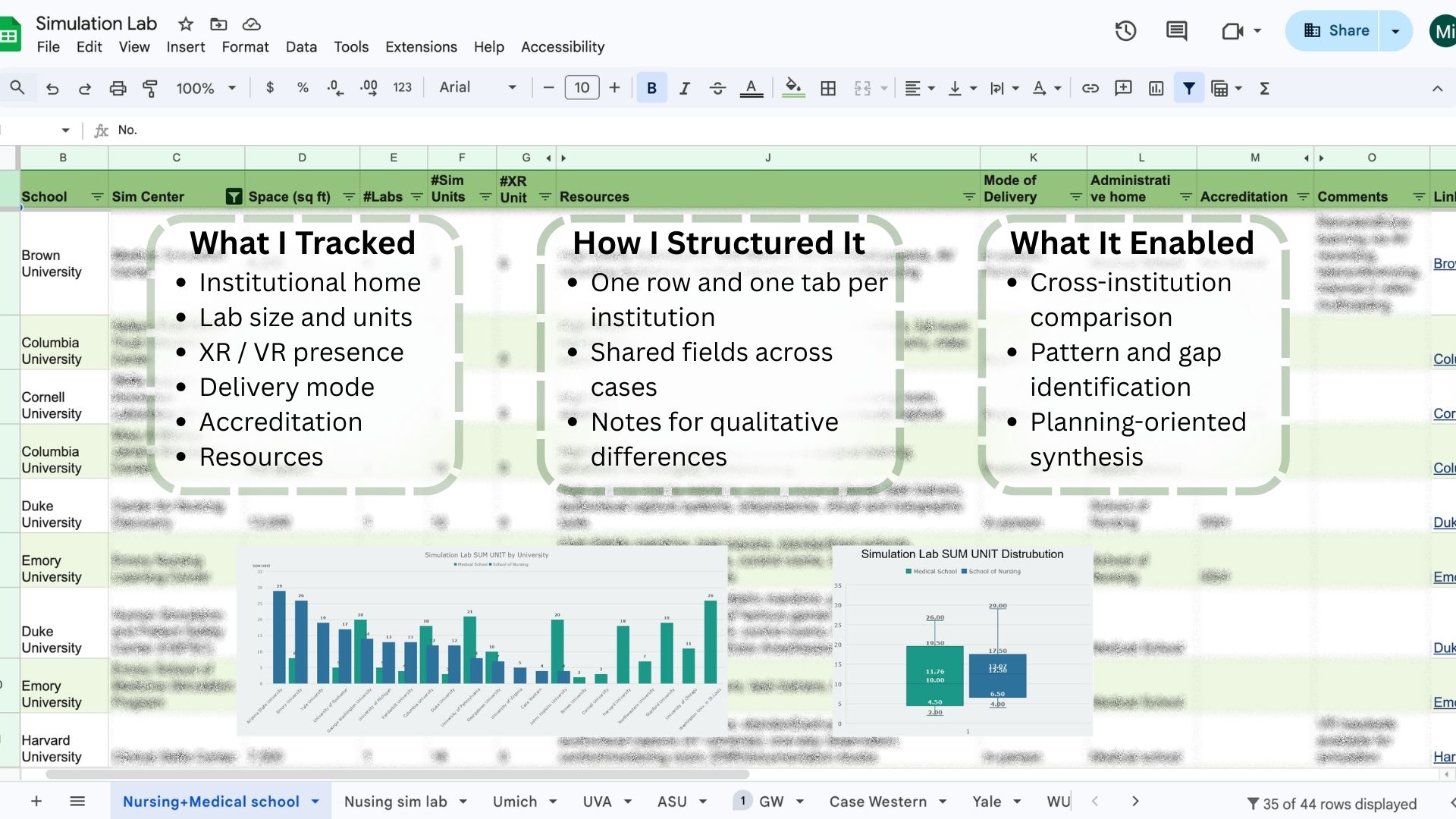
  • Defined comparison categories for peer simulation labs

  • Structured findings from university websites into a benchmarking summary

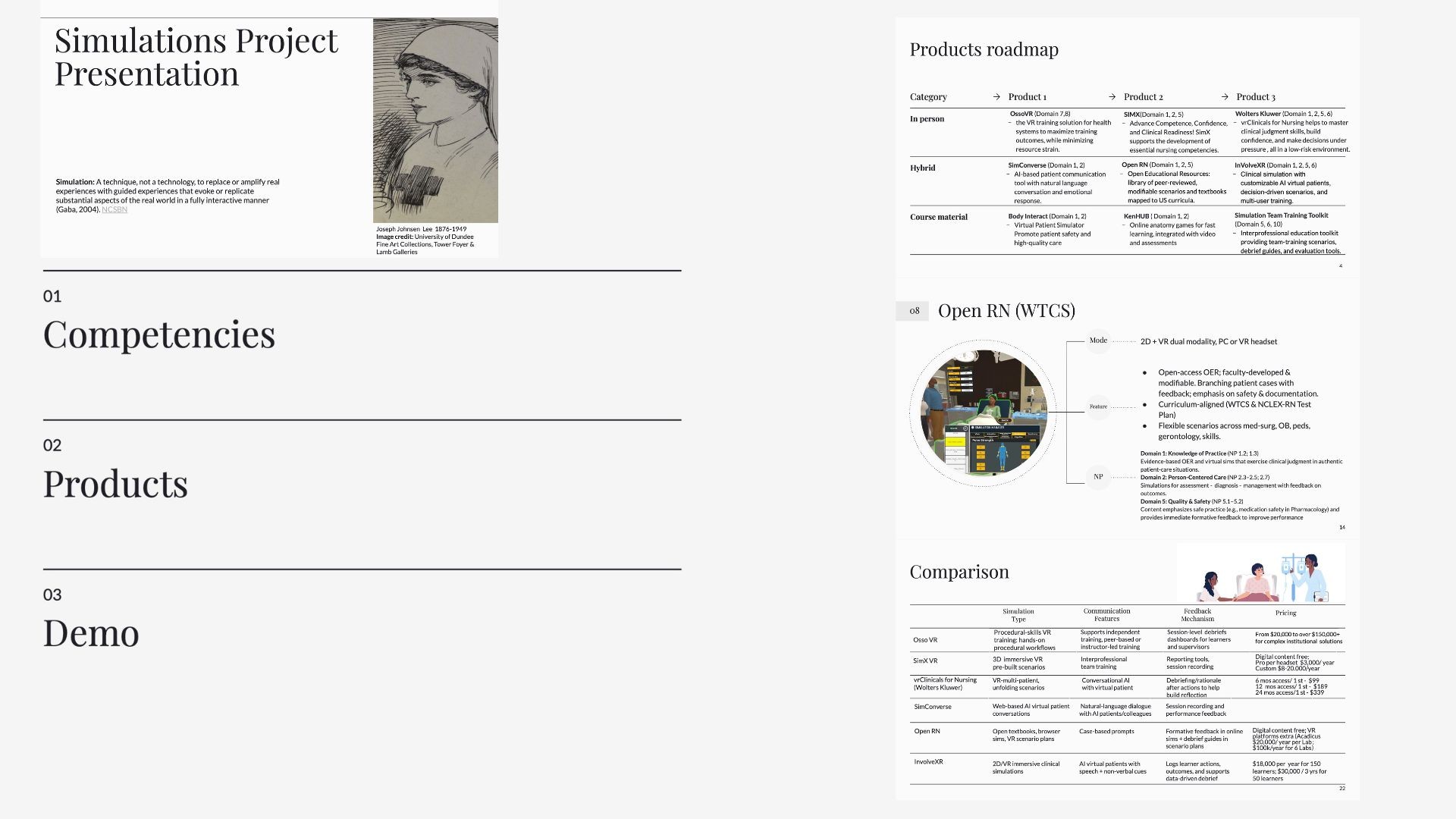
  • Compared online simulation products by modality, assessment, and nursing competency alignment

  • Reviewed telesimulation cases for fit with nursing education and interaction design

  • Identified patterns, gaps, and possible directions for Georgetown

  • Synthesized the work into a written summary with charts and a slide deck


Problem

Relevant information existed across institutions, products, and case examples, but it was fragmented and difficult to compare in a way that could guide planning conversations.

Deliverables

  • Written summary with charts

  • Slide deck

  • Telesimulation case review

Outcomes

Turned benchmarking, product scan, and case research into clearer planning options for Georgetown’s simulation center, later shared by CNDLS within the team and with the project lead.

Reflection

This project reinforced that planning research is most useful when it turns broad information into structured options. It also strengthened how I approach design more generally: whether designing courses or future learning environments, strong decisions depend on research that clarifies direction early.

Context

The research was intended to inform planning for a new simulation center at Georgetown by providing a clearer view of peer infrastructure, current remote-access practices, and available digital or hybrid simulation options.

Process

  • Defined comparison categories for peer simulation labs

  • Structured findings from university websites into a benchmarking summary

  • Compared online simulation products by modality, assessment, and nursing competency alignment

  • Reviewed telesimulation cases for fit with nursing education and interaction design

  • Identified patterns, gaps, and possible directions for Georgetown

  • Synthesized the work into a written summary with charts and a slide deck


Problem

Relevant information existed across institutions, products, and case examples, but it was fragmented and difficult to compare in a way that could guide planning conversations.

Deliverables

  • Written summary with charts

  • Slide deck

  • Telesimulation case review

Outcomes

Turned benchmarking, product scan, and case research into clearer planning options for Georgetown’s simulation center, later shared by CNDLS within the team and with the project lead.

Reflection

This project reinforced that planning research is most useful when it turns broad information into structured options. It also strengthened how I approach design more generally: whether designing courses or future learning environments, strong decisions depend on research that clarifies direction early.

Simulation Lab Research

What this project shows

  • Turning research into planning options

  • Defining comparison frameworks

  • Strategic research for future learning environments

Multi-National Event Coordination

EdX Course QA And Maintenance